

Company Profile
Dongbao Bio-Tech will build the "five tops" in Chinese gelatin and collagen industries, top intelligent technology, top product quality, top production scale, top efficiency, top production (working) environment, aiming to build an Asian model factory and strive to create a global model factory in collagen industry.The company's total share capital is CNY 590 million and its total assets are nearly CNY 1.7 billion. Main products: Food Additive Gelatin, Pharmaceutical Gelatin, Photographic Gelatin, Hydrolyzed Collagen, Collagen Peptide and Calcium Hydrogen Phosphate.
Why Choose Us
01.
High Quality
The annual production capacity of gelatin is 13,500 MT, the annual production capacity of collagen peptide is 4,300 MT, at the same time we extend products such as healthy nutritional supplements.
Production bases
We have 3 production bases, they are the headquarters plant, the eco-park gelatin plant, and the eco-park collagen peptide art plant.
Factory
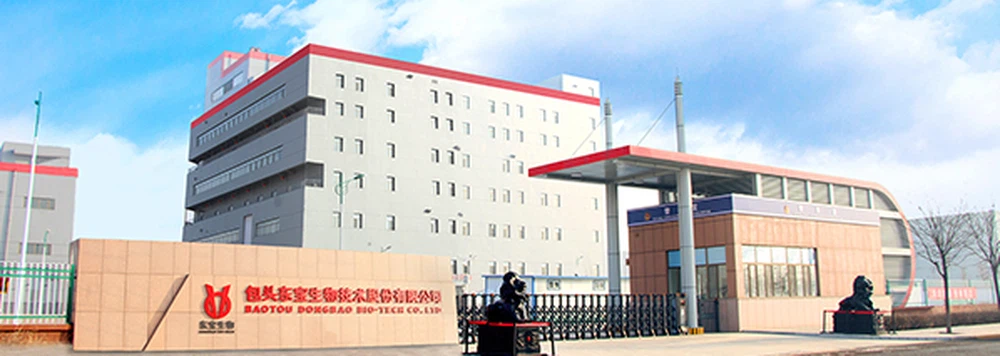
Baotou Dongbao Bio-Tech CO., LTD. was established in 1997 (The predecessor Baotou Fine Gelatin Factory was founded in 1960s). It is a high-tech enterprise and the sole public listed company in Chinese gelatin and collagen industry.
Certificates
● ISO 9001
● FSSC 22000
● NSF-GMP
● ISO 14001
● EDQM-CEP (COS and TSE)
● FDA-DMF
-

Production Introduction With the similar function of pharmaceutical grade gelatin for softgel , the edible gelatin is used for liquid, oil, or semi-solid nutrients, such as vitamin A and proplis.
Add to Inquiry -
We are the Gelatin for Hard Capsules manufacturer in China more than 25 years. Our main markets are China Domestic, North America, South America, Eastern Asia, Russia and Europe. Our product obtained
Add to Inquiry -
Gelatin for Photographic Paper
Gelatin, a large molecule polymer, is one of the most important materials in photographic industry. This type of gel has higher standard than others. Biochemically, the photography-applied gelatin
Add to Inquiry -
Production Introduction With the similar function of pharmaceutical grade gelatin for softgel , the edible gelatin is used for liquid, oil, or semi-solid nutrients, such as vitamin A and proplis.
Add to Inquiry -
Tablet is commonly consumed and the most acceptable dosage form. Tablet manufacturing is of the advantages of low costs and simple processes. In pharmaceuticals and dietary supplement, gelatin for
Add to Inquiry -
As we all know, Jelly products are popular throughout the world. Gelatin for jelly is the key point. The appearance of the jelly is shiny, glossy and clear. The smooth, wobbly and elastic texture is
Add to Inquiry -
We are the Gelatin for confection factory in China for many years. Our main markets are China Domestic, North America, South America, Eastern Asia, Russia and Europe. Our product obtained by
Add to Inquiry -
Gelatin for Yogurt is extracted from collagen and is a high molecular weight protein composed of 18 amino acids. Bovine hide , bones and fish scales are normally used for the production of the
Add to Inquiry -
We customized Gelatin for Plasma Substitute in China from 2018. As an important raw material in the field of bio-medicine, plasma-substituted gelatin has great market potential.
Add to Inquiry


What is Gelatin?
Gelatin is a protein obtained by boiling skin, tendons, ligaments, and/or bones with water. It is usually obtained from cows or pigs. Gelatin is used in shampoos, face masks, and other cosmetics; as a thickener for fruit gelatins and puddings (such as Jell-O); in candies, marshmallows, cakes, ice cream, and yogurts; on photographic film; and in vitamins as a coating and as capsules, and it is sometimes used to assist in “clearing” wines. Gelatin is not vegan.
Colorless, flavorless, and translucent, gelatin is used widely in various products because of its versatility. It can be found in foods, medical products, pharmaceuticals, cosmetics, confectionery, and more.
Benefits of Gelatin
Hydrated Skin
The protein and amino acids in gelatin can help the body build more collagen, a vital element in healthy skin. As people age, their natural collagen levels drop. This can lead to skin losing elasticity and the development of wrinkles. One study found that consuming collagen improved the skin’s hydration and reduced wrinkles.
01
Healthy Intestines
The proteins in gelatin can help support the intestinal wall, including building the protective mucus lining in your intestines. In early studies on rats, gelatin helped protect the lining of the intestines from damage, although further research is needed to fully confirm this effect in humans.
02
Lower Blood Sugar
The amino acid glycine that's found in gelatin may help manage blood sugar levels in those with Type 2 diabetes. In addition to a drop in blood sugar levels, study participants who took glycine as a treatment experienced reduced inflammation.
03
Stronger Joints and Bone
In addition to improving the elasticity of the skin, gelatin can also strengthen connective tissues. Studies have shown that collagen supplements like gelatin can reduce joint pain. They have also found that it can strengthen joints by increasing the density of the cartilage.
04
There are two different types of gelatin: type A and type B. The first of these, type A gelatin, is obtained from collagen that has been acid treated. To make type A gelatin, the skins of pigs are soaked for several hours in an acid bath until they swell to their maximum size. They are then removed from the acid and rinsed with cold water before hot water is used to extract the actual gelatin. Type B gelatin is extracted using an alkali treatment, usually involving lime.
Powder
Powder, like all gelatin, is derived from the collagen stored within the bones and skin of animals slaughtered for food or leather. The powder form has been dried and then broken into individual grains. These grains disperse more readily when used as an ingredient.
Sheets
When made into sheets, gelatin has a more transparent appearance, but it does not disperse quite as easily throughout the dishes it is added to. Sheets are sometimes also referred to as gelatin leaves.
How to use gelatin
Since there are many different gelatins it is always wise to follow both as recipe as well as the instructions on the box to get the result you want.
1. Hydrate gelatin
When you use gelatin you will notice that recipes will always tell you to soak the gelatin in room temperature, not warm, water. The gelatin you buy has been dried to make sure it stays good for a long period of time. Therefore, it needs some time to hydrate again, that is, to absorb the water. By soaking it in cold water first you ensure that everything hydrates before adding it to your product. Manufacturers of larger scale factories may add the gelatin directly into hot water, but they tend to have good mixers to ensure the particles are all broken up.
2. Don’t boil gelatin
Once you have added the gelatin to your product you should not heat it too much anymore. Gelatin and even though it can withstand quite warm temperatures, it will break down over time if you keep it at those temperatures for too long. As a result, the proteins become too small to form proper gels.
Once you finished heating the other ingredients you can add the hydrated gelatin. It is no problem to add it to a warm mixture.
3. It takes time to firm up
Gelatin takes a while to form its gel structure. Most recipes will tell you wait a few hours. During this time the mixture might have to cool down and once cool the gelatin proteins need to organize themselves. Even after the gel is formed though it will continue to harden and firm up. If you leave your panna cotta in the fridge for a couple of days you will notice that it has hardened compared to the fresh one. Of course, it won’t harden indefinitely and after some time the hardening levels off.
4. Don’t freeze gelatin gels
Gelatin gels aren’t very resistent to low frozen temperatures. The ice crystals that form in the freezer can break the gel structures and as a result, some water will seep out when you thaw them again. It just isn’t as strong anymore. Best to just store your gelatin snack in the fridge.
Sources and Processing of Gelatin
Gelatin is derived from various animal sources, including pigs, cows, and fish, and it can also be extracted from specific plants. The extraction process involves several steps. The raw materials, mainly animal skins, bones, and connective tissues, are first pretreated to remove impurities and to partially break down the proteins. The pretreatment usually involves a combination of physical methods and chemical treatments, which can include heating, acid, or alkali treatment.
Pig-derived Gelatin
This type of gelatin is obtained mostly from pork skin and, to a lesser extent, from pork bones. It is extensively used due to its balanced amino acid composition and high gel strength.
Cow-derived Gelatin
Gelatin obtained from bovine sources is generally extracted from bones and hides. This type of gelatin is popular in regions where pork is not consumed due to dietary restrictions.
Fish-derived Gelatin
Obtained primarily from fish skin and bones, this type of gelatin is preferred when a completely odorless and colorless gel is required. It is also an alternative for people who avoid mammalian sources due to dietary or religious reasons.
Gelatin Extraction and Preparation
Gelatin extraction involves a meticulous process that distinguishes between bovine and porcine gelatin, and also offers variations such as hydrolyzed gelatin and different types of gelatin grades. Bovine gelatin is derived from the collagen found in cow bones, while porcine gelatin is sourced from pig skin and bones. The extraction process begins with the selection and inspection of high-quality animal parts, which are then carefully cut into smaller pieces.
After the initial cutting, the gelatin undergoes a degreasing and roasting process to remove any excess fats and impurities. The next step involves subjecting the gelatin to acid and alkaline treatment, which helps break down the collagen into its gelatinous form. This process is crucial in order to achieve the desired gel strength and texture.
Once the acid and alkaline treatment is complete, the gelatin is boiled to further extract the collagen proteins. This is followed by evaporating and grinding the gelatin to create a fine powder, which can then be used in various applications. To enhance the flavor and appearance, flavorings and colorings may be added to the gelatin before it is packaged.
The gelatin industry offers different types of gelatin grades, each with its own unique properties and applications. For example, hydrolyzed gelatin undergoes additional processing to break down the proteins into smaller peptides, resulting in improved solubility and faster gelation. These different grades of gelatin provide versatility in terms of texture, setting time, and usage in various industries, such as food processing, pharmaceuticals, and cosmetics.
The Production Process Gelatin


This is a complex, multi-stage process requiring highly technical industrial equipment. Starting with the connective tissue and bones of pigs, cattle or fish, the collagenous protein is separated out and made into gelatin which is a pure, high-grade protein.
Alkaline process: For bovine connective tissue, which is densely connected. It is pre-treated with an alkaline solution for several weeks, this gently changes the collagen structure. The collagen is then soluble in warm water and can therefore be separated from the remaining raw material.
Acid Process: For non-bovine connective tissue, making collagen extraction possible after a one-day acid treatment.
Extraction: The pre-treated raw materials are mixed with hot drinking water and extracted in a multi-stage process. The temperature of the hot water used determines the gel strength: the lower the temperature of the water, the higher the gel strength, or Bloom value, of the extracted gelatin.
Purification: `High-performance separators are used to remove traces of fat and fine fibers from the extracted solutions, then the finest particles are removed through filtration. In the final purification step, the gelatin is freed of calcium, sodium, residual acid and other salts.
Thickening: As the solution is concentrated in a vacuum evaporation system, it thickens into a honey-like mass.
Drying: The concentrated gelatin solution is sterilized, cooled, set and then dried under strict hygienic conditions. The result is “jelly noodles” that are then ground into grains when they are dry.
How to Cook With Gelatin
Gelatin must be dissolved into another substance to be activated. This means any recipe that contains gelatin must have a liquid component that's heated in order for the gelatin to dissolve. The food must then subsequently be chilled to allow the gelatin to set.
Mix powdered gelatin with warm water before adding it to a recipe. Use about three tablespoons of water per tablespoon of gelatin, stir the granules in and let it sit for a few minutes. As the gelatin absorbs the water, it will thicken to the consistency of applesauce. Soak leaf gelatin sheets in cold water for five minutes to soften, then gently wring out the leaves to remove excess moisture before using.
Gelatin should not be boiled as the high heat can break down its structure and destroy its ability to solidify. Certain fruits, such as pineapple, guava, and papaya, contain enzymes that can also inhibit gelatin's ability to solidify. The canning and pasteurization process typically destroys these enzymes, which means canned versions of these fruits can be successfully used with gelatin.
Importance Of Not Boiling Gelatin
Gelatin, a versatile ingredient, can be dissolved by either boiling it or adding it to warm water. However, it is crucial to handle gelatin with care and avoid certain conditions that may diminish its gelling properties. Here are some key considerations to keep in mind:
Avoid boiling gelatin directly
Boiling gelatin can result in a loss of its gelling capabilities, rendering it ineffective in forming a gel. To preserve its properties, it should be dissolved at a temperature below its boiling point.
01
Bloom gelatin in cold water
Before adding hot liquids, it is essential to bloom gelatin in cold water. This process prevents the formation of lumps and ensures a smooth texture in your culinary creations.
02
Choose the appropriate type and strength of gelatin
Different recipes may require different types and strengths of gelatin. Be mindful of the specific requirements of your culinary endeavors.
03
Pay attention to the recommended methods
Always follow the recommended methods for dissolving gelatin in your recipes. This will help you achieve the desired texture and consistency.
04
Our Factory
Baotou Dongbao Bio-Tech CO., LTD. was established in 1997 (The predecessor Baotou Fine Gelatin Factory was founded in 1960s). It is a high-tech enterprise and the sole public listed company in Chinese gelatin and collagen industry. Stock code: Dongbao Bio-Tech (300239).


FAQ
As one of the leading gelatin manufacturers and suppliers in China, we warmly welcome you to buy or wholesale the best gelatin in stock here from our factory. All customized products are with high quality and competitive price.
