

Company Profile
Dongbao Bio-Tech will build the "five tops" in Chinese gelatin and collagen industries, top intelligent technology, top product quality, top production scale, top efficiency, top production (working) environment, aiming to build an Asian model factory and strive to create a global model factory in collagen industry.The company's total share capital is CNY 590 million and its total assets are nearly CNY 1.7 billion. Main products: Food Additive Gelatin, Pharmaceutical Gelatin, Photographic Gelatin, Hydrolyzed Collagen, Collagen Peptide and Calcium Hydrogen Phosphate.
Why Choose Us
01.
High Quality
The annual production capacity of gelatin is 13,500 MT, the annual production capacity of collagen peptide is 4,300 MT, at the same time we extend products such as healthy nutritional supplements.
Production bases
We have 3 production bases, they are the headquarters plant, the eco-park gelatin plant, and the eco-park collagen peptide art plant.
Factory
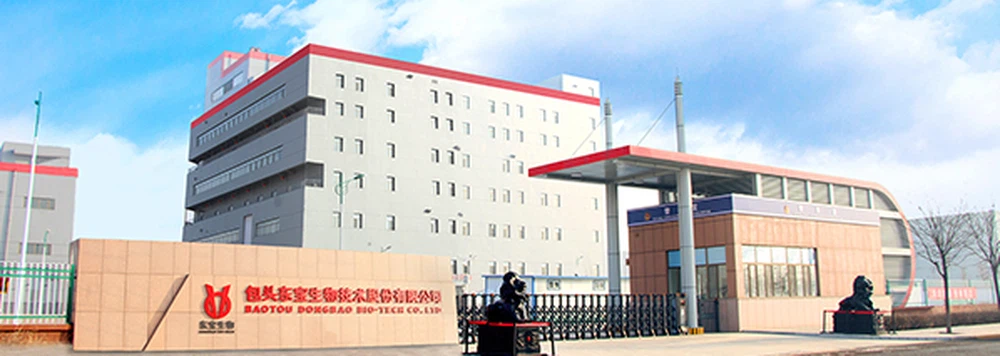
Baotou Dongbao Bio-Tech CO., LTD. was established in 1997 (The predecessor Baotou Fine Gelatin Factory was founded in 1960s). It is a high-tech enterprise and the sole public listed company in Chinese gelatin and collagen industry.
Certificates
● ISO 9001
● FSSC 22000
● NSF-GMP
● ISO 14001
● EDQM-CEP (COS and TSE)
● FDA-DMF


What is Collagen?
Collagen is the most abundant protein in your body. It accounts for about 30% of your body’s total protein. Collagen is the primary building block of your body’s skin, muscles, bones, tendons and ligaments, and other connective tissues. It’s also found in your organs, blood vessels and intestinal lining.
Proteins are made from amino acids. The main amino acids that make collagen are proline, glycine and hydroxyproline. These amino acids group together to form protein fibrils in a triple helix structure. Your body also needs the proper amount of vitamin C, zinc, copper and manganese to make the triple helix.
Benefits of Collagen
May improve skin health
Collagen is a major component of your skin. It plays a role in strengthening skin, as well as in elasticity and hydration. As you age, your body produces less collagenTrusted Source, leading to dry skin and the formation of wrinkles.
May relieve joint pain
As you age, the amount of collagen in your body decreases, and your risk increases for joint disorders such as osteoarthritis. Some studies suggest that collagen supplements may help improveTrusted Source symptoms of osteoarthritis and reduce overall joint pain.
May prevent bone loss
Your bones are made mostly of collagen. As you age, collagen deteriorates, and your bone mass decreases. This may lead toTrusted Source conditions such as osteoporosis, which is characterized by low bone density and a higher risk of bone fractures.
May boost muscle mass
As the most abundant protein in the body, collagen is an important component of skeletal muscle.
In a 12-week study, 26 older men with sarcopenia took 15 grams of collagen while participating in an exercise program. Compared to men who exercised but didn’t take collagen, they gained significantly more muscle massTrusted Source and strength.
May promote heart health
Collagen provides structure to your arteries, the blood vessels that carry blood from your heart to the rest of your body.
Without enough collagen, arteries may become less flexible and elastic, which may lead to atherosclerosis, a disease characterized by the narrowing of your arteries. This condition may cause heart attack and stroke.
May improve gut health
Although no randomized controlled trials support this claim, some health professionals report that collagen supplements can treat leaky gut syndrome, also called intestinal permeability. Individuals report collagen helps, but research is needed.
Type of Collagen
Collagen Type I
Type I collagen is, by far, the most abundant collagen in your body. It accounts for 90% of your total collagen and is crucial in forming connective and load-bearing tissues. For example, it provides ligaments and tendons with their mechanical ability to support your weight.
01
Collagen Type II
Type II collagen also forms part of the fibril-forming sub-group, as it’s present in structures such as tendons, skin, and ligaments. Yet, it serves a different function, as it is only found in two zones out of the four that make up those ligamentous structures.
02
Collagen Type III
Collagen type III is found along with type II in the fibrocartilage zone, although in fewer amounts. However, it’s also a crucial component in your bowel, uterus, and blood vessels. Furthermore, collagen type III is vital in wound healing, as it’s involved in the blood-clotting process .
03
Collagen Type IV
Collagen type IV forms part of a specific cellular structure called the “basement membrane.” Found beneath the cells of your organ’s tissues and your skin, the basement membrane provides structure and protects the cells it’s attached to. For example, it forms a barrier to prevent the spread of cancer and tumors.
04
Collagen Type V
Type V collagen is another fibril-forming group member present in most of your body’s connective tissues. Like the other similarly-classified collagens, it’s found in tendons and ligaments — but in smaller quantities.
05
Collagen Applications
Collagen is irreplaceable in many industries due to its unique properties.
01
In the food industry
It serves as a thickening agent and improves the texture and quality of products. It is an important ingredient in jellies, jellies as well as sausages and cold cuts, where it improves the texture and moisture content of products.
02
In cosmetics
Since many people want to maintain a youthful appearance for as long as possible, it was decided to use the properties of Collagen in the cosmetics industry. It is mainly used in the production of creams, masks or gels. Collagen is not absorbed by the skin, but it has been shown to form a hydrophilic film on the skin that prevents water loss. This, in turn, slows down the aging process of the skin, but also protects it from external influences.
03
In medicine
The inhibition of skin aging that collagen causes is used not only in cosmetics, but also in esthetic medicine. Collagen is mainly used as a filler that, when placed under the skin, smooths wrinkles and increases skin tone. Its use further stimulates the production of this protein in the skin. In addition, when applied to subcutaneous tissues, localized fat reduction or cellulite smoothing can be achieved.
Collagen is also used in sports medicine. Any muscle or tendon injury can be naturally restored with the help of Collagen injections.

How and What Are Collagen Supplements Made From?
We have heard a number of benefits Collagen has to offer to a human body. From anti-aging to stronger muscles, bones, and better joint health to beautiful and flawless skin; collagen is a super supplement that contributes a lot to overall health. Though it is made in the body naturally, its production is affected by aging.
That is why experts suggest adding collagen supplements in your diet to make up for the decreasing collagen and to keep your body in good health. But how exactly is this wonder supplement made? Of course, the process his highly scientific, but the curiosity surrounding as to how it is made has always remained to a common consumer.
Manufacturing of Collagen
Collagen in itself is not a single substance but rather, a family of protein that is found in the connective tissues, muscles, bones, and skin of all animals in abundance. When collagen is used in the form of supplements (i.e. ingested from an outside source) the protein needs to be first broken down into hydrolyzed collagen (which is a polypeptide). It is hydrolyzed when denatured or gelatin collagen is subjected to the process of “hydrolysis”. This makes it easier to be digested and absorbed by the body, this means it does not turn to gel while retaining its surface-active properties.
Steps of the Manufacturing Process
Processing of raw collagen to hydrolyzed collagen that is good for consumption involves the following steps:
Hydrolyzed collagen is usually manufactured from the hydrolysis process of type 1 collagen (or its gelatin). Hydrolyzed collagen is a polypeptide composite that is manufactured from further hydrolysis of gelatin or denatured collagen.
This collagen can easily get dissolved in water and has no secondary displeasing taste. With hydrolyzed protein, very few bitter peptides are produced.
Many people are looking into ways of boosting collagen in the skin to stop wrinkles and other signs of skin aging. Here are some options that researchers have investigated.
1. Collagen supplements
People take collagen supplements for their joint and skin health.
2. Hyaluronic acid
Hyaluronic acid is a compound that helps promote collagen production.
Dermal fillers, which aim to reduce lines in the skin, often contain hyaluronic acid. Research from 2020Trusted Source found that a combination of hyaluronic acid and a purified polynucleotide helped boost the amount and quality of collagen in the skin and enhance skin elasticity.
3. Vitamin C
Vitamin C is essentialTrusted Source for the production of collagen. A vitamin C deficiency can lead to low collagen levels, resulting in a potentially serious condition known as scurvy.
Many skin care companies add vitamin C to their protective creams. ResearchTrusted Source suggests topical applications may help protect the skin from sun exposure and changes in pigmentation.
4. Aloe vera gel
People often use aloe vera gel to treat the skin after sunburn or ease a rash.
People can use products containing aloe as a topical cream or gel or an oral supplement.
5. Ginseng
Ginseng is a plant with a wide range of possible health benefits.
Ginseng has anti-inflammatory and antioxidant properties. Researchers also note that it might help prevent aging in skin cells.
6. Antioxidants
Antioxidants help protect the body from free radicals, which are molecules that the body produces during metabolism.
Exposure to chemicals, such as those in tobacco smoke, can also introduce free radicals into the body.
Various antioxidants may help protect and rejuvenate the skin, for example, by promoting collagen production. Antioxidants are present in many plant-based foods.
Ways to Protect, Maintain & Boost Your Collagen Levels


Collagen-Boosting Food
You don’t need to look much further than your own kitchen for the best internal nutrient source. That’s because eating foods rich in amino acids, Vitamin C, and antioxidants are best for supporting healthy collagen levels. “Amino acids are the foundations of firm skin, Vitamin C helps protect collagen, and antioxidants scavenge up those free radicals that damage it,” says Rossli Delorey, an advanced practice registered nurse at AW Plastic Surgery. A few items she says to stock up on: citrus fruits, red veggies (think tomatoes, beets, and red peppers, which are high in the antioxidant, lycopene), and dark leafy greens.
Collagen Supplements
If you’re feeding your body all the right nutrients it needs to make collagen via your diet, you don’t need a supplement. But if you think you have some gaps, there’s certainly no harm in taking one. “Hydrolyzed collagen – also known as collagen peptide – comes in a powder that you can easily put in food, like drinks, smoothies, but even soups and sauces,” says Thaden. Skincare aside, studies show that these supplements are great for improving joint health and strengthening bones.
Retinol and Retinoids
Both chemical derivatives of vitamin A, retinol and retinoids (retinoids essentially being an umbrella term for both over-the-counter retinols and prescription retinoids) are one of the most effective ingredients for slowing the skin’s aging process. When used in topical creams, they help treat multiple skin issues, including assisting in the production of natural chemicals (like hyaluronic acid) and blocking inflammatory pathways that worsen acne. But most importantly, retinoids also speed up cell turnover, something that slows as we age, and what stimulates collagen production, resulting in firmer skin and fewer wrinkles and loss of elasticity.
Antioxidant & Vitamin C Serums
Second to retinoids, antioxidants and Vitamin C are the next key ingredients to maintaining collagen levels by protecting it. “These components won’t play a huge role in stimulating or boosting collagen, but they are what fight free radicals,” says Delorey. “And free radicals are the big culprits that destroy collagen, and therefore, lead to the appearance of lines and wrinkles.” For an antioxidant serum adored by AW – and dermatologists, for that matter – try SkinCeuticals CE Ferulic. Containing three potent types of antioxidants – pure Vitamin C pure, Vitamin E, and ferulic acid – it provides advanced protection against damaging free radicals, among many other benefits.
Our Factory
Baotou Dongbao Bio-Tech CO., LTD. was established in 1997 (The predecessor Baotou Fine Gelatin Factory was founded in 1960s). It is a high-tech enterprise and the sole public listed company in Chinese gelatin and collagen industry. Stock code: Dongbao Bio-Tech (300239).


FAQ
As one of the leading collagen manufacturers and suppliers in China, we warmly welcome you to buy or wholesale the best collagen in stock here from our factory. All customized products are with high quality and competitive price.
