

Company Profile
Dongbao Bio-Tech will build the "five tops" in Chinese gelatin and collagen industries, top intelligent technology, top product quality, top production scale, top efficiency, top production (working) environment, aiming to build an Asian model factory and strive to create a global model factory in collagen industry.The company's total share capital is CNY 590 million and its total assets are nearly CNY 1.7 billion. Main products: Food Additive Gelatin, Pharmaceutical Gelatin, Photographic Gelatin, Hydrolyzed Collagen, Collagen Peptide and Calcium Hydrogen Phosphate.
Why Choose Us
01.
High Quality
The annual production capacity of gelatin is 13,500 MT, the annual production capacity of collagen peptide is 4,300 MT, at the same time we extend products such as healthy nutritional supplements.
Production bases
We have 3 production bases, they are the headquarters plant, the eco-park gelatin plant, and the eco-park collagen peptide art plant.
Factory
Baotou Dongbao Bio-Tech CO., LTD. was established in 1997 (The predecessor Baotou Fine Gelatin Factory was founded in 1960s). It is a high-tech enterprise and the sole public listed company in Chinese gelatin and collagen industry.
Certificates
● ISO 9001
● FSSC 22000
● NSF-GMP
● ISO 14001
● EDQM-CEP (COS and TSE)
● FDA-DMF

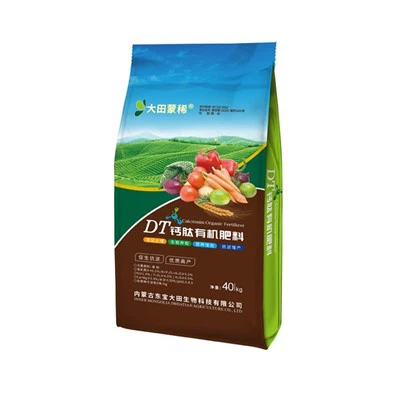
What is Organic Fertilizer?
Organic fertilizers are carbon-based, naturally produced materials added to soil or plants to sustain growth. The term covers a variety of plant-derived substances, from fresh or dried plant material to agricultural by-products to animal manures.
Organic fertilizers contain moderate amounts of nutrients that support plant growth—they have low nitrogen, phosphorus, and various other minerals, depending on the source materials.
The nutrients are slowly released into the soil, maintaining soil fertility, recreating balance in the environment, and organically supporting plant development.
Benefits of Organic Fertilizer
Soil Structure
Because of the organic matter present in organic fertilizer, soil structure is improved and as a result the soil’s ability to hold onto water and nutrients increases.
01
Microbes Thrive
Synthetic fertilizer consists of chemical molecules without carbon. These molecules can sometimes be disruptive and are not accessible to microbes. On the other hand, organic fertilizer is rich in organic matter, which helps microbes thrive. Organic fertilizer contains carbon as part of its chemical makeup; and it is the carbon, along with nitrogen, phosphorus and potassium that feeds microbes and enables them to make nutrients available for plants in a naturally occurring biological process.
02
Sustainable and Environmentally Friendly
Synthetic fertilizers runoff into our waterways harming marine life and water quality. Organic fertilizers do not run off as easily (if at all) and are associated with soil structure. According to the Organic Trade Association, organic fertilizer also increases species biodiversity by 30% compared with synthetic fertilizer.
03
Reduce Fertilizers and Pesticides
Although organic fertilizer can be more costly than synthetic, it can reduce the need for pesticides and the overall nitrogen, phosphorus and potassium requirements. Because of the reductions, organic fertilizer can be cost neutral and sometimes a cost savings.
04
Type of Organic Fertilizer
1) Manure
Manure is a balanced fertilizer made of waste mainly from cows, sheep, poultry, and horses. It contains balanced amounts of nutrients that provide sustainable plant growth and bring back balance into the soil. Thanks to its composition, manure is an effective fertilizer for all types of plants and cultures.
2) Bat Guano
Bat guano (or bat waste) is a natural fungicide and highly effective organic fertilizer, with a high nitrogen concentration and a ratio of 10-3 NPK—10 percent nitrogen, 3 percent phosphorus, and 1 percent potassium.
Bat waste is the perfect environment for pathogenic microorganisms, especially spores of a fungus that causes a lung disease called histoplasmosis, which can be lethal in some cases.
3) Blood or Bone Meal
Blood and bone meal are fertilizers obtained from powdered animal blood or ground bone. The blood-based products are rich in nitrogen, so you should use them in small amounts to support green growth.
Bone meal is famous for its high amounts of calcium and phosphate, essential for developing a resistant root system. You could use this fertilizer type to grow trees and other perennial plants.
4) Fish emulsion
Fish emulsion is made of decomposed powdered fish and carcass products and can have a particular smell. It’s rich in nutrients and secondary elements, such as calcium and magnesium. It’s an excellent option for multiple types of fruits and vegetables.
Application of Organic Fertilizers
Organic fertilizers are a great way to keep your garden healthy and thriving. They are made from natural sources and are free from harmful chemicals. Here are some tips on how to apply organic fertilizers to different types of plants.
Vegetables
Organic fertilizers are particularly useful for vegetables. They help to improve the soil quality and provide essential nutrients for the plants. When applying organic fertilizers to vegetables, it is important to follow the instructions carefully. Too much fertilizer can damage the plants and reduce their yield. It is also important to apply the fertilizer evenly across the vegetable bed.
01
Flowers
Organic fertilizers are also great for flowers. They help to promote healthy growth and vibrant blooms. When applying organic fertilizers to flowers, it is important to choose a fertilizer that is high in phosphorus. This will help to promote flower production. It is also important to apply the fertilizer evenly around the base of the plant.
02
Fruits
Organic fertilizers are essential for fruit trees and bushes. They help to improve the soil quality and provide essential nutrients for the plants. When applying organic fertilizers to fruit trees and bushes, it is important to follow the instructions carefully. Too much fertilizer can damage the plants and reduce their yield. It is also important to apply the fertilizer evenly around the base of the plant.
03
Shrubs
Organic fertilizers are great for shrubs. They help to promote healthy growth and vibrant foliage. When applying organic fertilizers to shrubs, it is important to choose a fertilizer that is high in nitrogen. This will help to promote leaf growth. It is also important to apply the fertilizer evenly around the base of the plant.
04
Trees
Organic fertilizers are essential for trees. They help to improve the soil quality and provide essential nutrients for the plants. When applying organic fertilizers to trees, it is important to follow the instructions carefully. Too much fertilizer can damage the plants and reduce their yield. It is also important to apply the fertilizer evenly around the base of the tree.
05
What Kind of Fertilizer cannot be Used at the Same Time?
Farmyard manure cannot be mixed with alkaline fertilizer, such as plant ash, lime nitrogen, lime, calcium magnesium phosphate fertilizer etc. That is because the chief ingredient in human and animal manure is nitrogen. The farmyard manure will be neutralized and failure if mixed with strong alkaline fertilizer.
Superphosphate cannot be mixed with alkaline fertilizer, such as plant ash, lime nitrogen etc. Otherwise, it will reduce the effectiveness of phosphorus. Lowly water-soluble phosphates, such as ground phosphate rock, bone meal etc., also cannot be mixed with plant ash, and lime nitrogen, as the lowly water-soluble phosphate will be more difficult to dissolve. Crop is unable to absorb and utilize.
The fused calcium-magnesium phosphate cannot be mixed with ammonium fertilizer. If alkaline fertilizers are mixed with ammonium fertilizers, such as ammonium bicarbonate, ammonium sulfate, ammonium nitrate, and ammonium chloride etc., the fertilizer efficiency will be decreased because of the increasing volatility of ammonia.

Is Organic Fertilizer Better Than Chemical?
Despite the disadvantages of organic fertilizers, including time and cost, I’d like to point out that the overall and long term effects are greater compared to chemical fertilizers. It may take longer to correct a deficiency, with several applications of organic fertilizer, but the soil will have a healthy supply of that nutrient for quite some time afterwards. Over time, the need for organic fertilizers is reduced overall, leading to reduced costs in the long run.
For example, if you notice your plants have a nitrogen deficiency, you can apply chicken manure or blood meal, which are both high in nitrogen. They will need to be need to be applied a few times, and given time to break down in the soil. Your plant would continue to show signs of a nitrogen deficiency for awhile while this occurs.
After this period, however, the soil should have a good supply of nitrogen for quite some time afterwards. If you continue feeding the soil with things like compost, the nitrogen should continually be replaced as it is used by your plants. If your know your plants are heavy on nitrogen use, a regular application of manure or blood meal should be given, eliminating future deficiencies.
Using that same example of a nitrogen deficiency, yet treating with a chemical fertilizer, would be quite different. The plant would be given nitrogen in a form already available, and the deficiency would be corrected much quicker. However, the amount of nitrogen available in the soil would not change.
If the soil is lacking in nitrogen, the deficiency will return. Regularly feeding with a chemical fertilizer containing nitrogen long term, to prevent a deficiency, could cause the plant to stop producing blooms or fruit.
What Exactly is the Difference Between a Chemical Fertilizer and an Organic One?
For starters, you can think of chemical fertilizers as synthetically made because they do not occur naturally in the environment. Of course, some organic, chemical free fertilizer options are also processed and thus they encounter a bit of human interference before making their way to your garden. But regardless of the production process, organic fertilizer is still derived from natural sources.
In this table you’ll find a breakdown of the two different types of fertilizer and how they compare to each other across categories such as nutrients, availability and environmental impact.
|
Chemical Fertilizer |
Organic Fertilizer |
||
|
Examples |
Ammonium chloride, ammonium nitrate, ammonium phosphate, ammonium sulfate, urea. |
Animal manure, blood meal, compost, cottonseed meal, fish emulsion. |
|
|
Overall Pros |
Easy to tailor to your specific needs as you can purchase them with a balanced NPK ratio or with a higher level of only one nutrient if that’s what your garden requires. |
Not only feeds plant life but also heals soil and helps it to retain moisture and provide a slow and steady release of nutrients to your garden. |
|
|
Overall Cons |
Known to negatively impact soil quality and aquatic health in nearby water sources. |
Can take too long to release the nutrients your plants need and often have an imbalanced NPK ratio. |
|
|
Nutrients |
Nutrient levels are usually highly accurate to package labels and blends can be purchased depending on what your garden needs. |
Vary depending on type used, but also tends to carry additional beneficial micronutrients to boost soil and plant health. |
|
|
Nutrient Release Rate |
Gives a quick boost of nutrients meaning you may see results in one to two weeks, but requires further application to maintain rate of growth. |
Release rate is slow and if soil is particularly depleted it can take a long time to repair, but plants are able to only consume what they need and are not overfed. |
|
|
Manufacturing Process |
Made from synthetic materials often in very large batches so products can be restocked quickly. |
Made from natural materials, which sometimes requires smaller batches or lengthier production times. |
|
|
Availability |
Readily available anywhere you buy gardening supplies and often in larger containers and bags. |
Can be harder to find and sometimes only available at specialty stores or online and often come in smaller containers and bags. |
|
|
Affordability |
Tends to be very affordable, but remember you may need to buy it more frequently. |
Tends to be more expensive, but remember you may only need to apply it once or twice. |
|
|
Application Process |
Easy to apply, however care must be taken not to overfeed plants or spill excess fertilizer as it can burn plants and some brands may burn skin. |
Sometimes comes in a “raw” form and thus needs to be prepared before application, but there’s little risk of overfeeding or burning plants. |
|
|
Impact on Soil |
Contributes very little to the soil’s overall ecosystem and can even disrupt its natural balance. |
Helps strengthen soil’s ecosystem, which not only has shorter term seasonal benefits, but long term benefits as well. |
|
|
Impact on Plants |
Can cause excess top growth and stressed roots, which may lead to a decline in plant health over time. |
Targets soil and roots of plants first, so plant stems and leaves often take longer to grow. |
|
|
Impact on Waterways |
Excess chemical fertilizers can leach into waterways and disrupt aquatic life. |
Because plants tend to use what they’ve been fed, very little leaching occurs. |
|
Our Factory
Baotou Dongbao Bio-Tech CO., LTD. was established in 1997 (The predecessor Baotou Fine Gelatin Factory was founded in 1960s). It is a high-tech enterprise and the sole public listed company in Chinese gelatin and collagen industry. Stock code: Dongbao Bio-Tech (300239).



FAQ
As one of the leading organic fertilizer manufacturers and suppliers in China, we warmly welcome you to buy or wholesale the best organic fertilizer in stock here from our factory. All customized products are with high quality and competitive price.
high nitrogen npk fertiliser, liquivive collagen, natural fertilizer for water plants