

Company Profile
Dongbao Bio-Tech will build the "five tops" in Chinese gelatin and collagen industries, top intelligent technology, top product quality, top production scale, top efficiency, top production (working) environment, aiming to build an Asian model factory and strive to create a global model factory in collagen industry.The company's total share capital is CNY 590 million and its total assets are nearly CNY 1.7 billion. Main products: Food Additive Gelatin, Pharmaceutical Gelatin, Photographic Gelatin, Hydrolyzed Collagen, Collagen Peptide and Calcium Hydrogen Phosphate.
Why Choose Us
01.
High Quality
The annual production capacity of gelatin is 13,500 MT, the annual production capacity of collagen peptide is 4,300 MT, at the same time we extend products such as healthy nutritional supplements.
Production bases
We have 3 production bases, they are the headquarters plant, the eco-park gelatin plant, and the eco-park collagen peptide art plant.
Factory
Baotou Dongbao Bio-Tech CO., LTD. was established in 1997 (The predecessor Baotou Fine Gelatin Factory was founded in 1960s). It is a high-tech enterprise and the sole public listed company in Chinese gelatin and collagen industry.
Certificates
● ISO 9001
● FSSC 22000
● NSF-GMP
● ISO 14001
● EDQM-CEP (COS and TSE)
● FDA-DMF
-

-
-
-
-
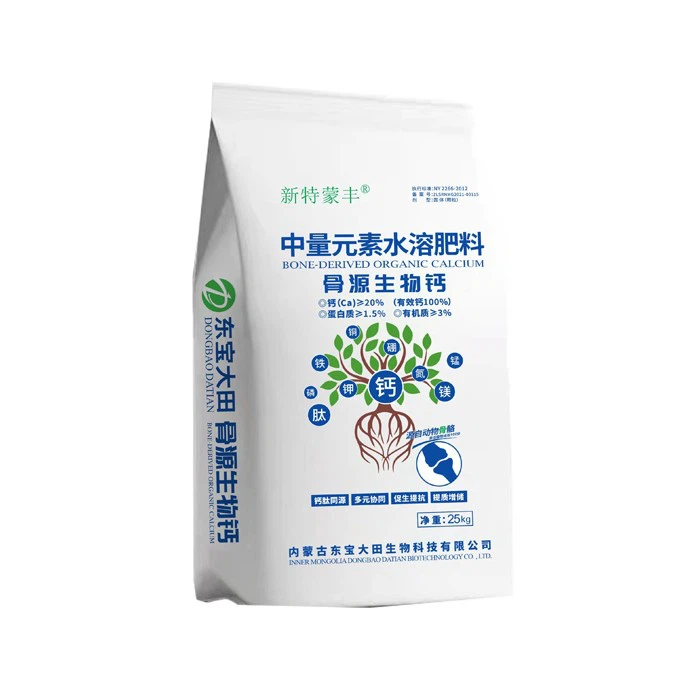
Bone-Derived Biological Calcium Fertilizer
Bone-Derived Biological Calcium Fertilizer
Add to Inquiry -
-


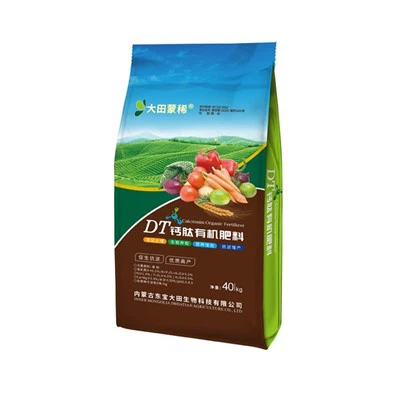
What is Fertilizer?
Fertilizers are food for plants. Just as we need an adequate and consistent diet to grow and stay healthy, plants and crops have to get proper nutrition from the soil to thrive.
Plants require a balanced supply of nitrogen, phosphorus, potassium, and sulphur. As plants extract these nutrients from the soil during every growing season, they must be replenished through fertilizers, manure, and compost added to fields or gardens annually.
The advantage of using fertilizers is they can be applied with more control to match crop needs and protect the environment. They can also supplement manure or compost to ensure the soil gets an adequate supply of nutrients.
Benefits of Fertilizer
Increased crop yield
The primary advantage of using these plant nutrients is their ability to enhance crop yield significantly. Fertilizers provide essential nutrients like nitrogen, phosphorus, and potassium, which are crucial for the healthy growth of plants. These nutrients are the plant’s needs that help in maximizing the development of leaves, flowers, and fruits, resulting in higher yields per unit area.
Improved soil fertility
Fertilizers play a crucial role in replenishing soil nutrients, which can become depleted over time due to continuous cultivation. They replenish essential elements, such as nitrogen, phosphorus, and potassium, promoting healthy soil fertility. Proper soil fertility allows for better water and nutrient absorption, creating an optimal environment for plant growth.
Faster plant growth and development
Fertilizers provide plants with readily available nutrients, ensuring rapid growth and development. This advantage is particularly beneficial in regions with short growing seasons, enabling farmers to maximize their crop production within a limited timeframe.
Customizable nutrient composition
Modern fertilizers offer customizable nutrient compositions, allowing farmers to tailor the fertilizer application to the specific needs of their crops and soil. This flexibility ensures that plants receive the precise nutrients they require, optimizing growth and minimizing nutrient wastage.
Nutrient balancing and soil ph regulation
Fertilizers aid in balancing soil nutrient ratios and regulating soil pH levels. Maintaining an optimal pH range is critical for nutrient uptake and overall plant health. By adjusting the pH level, fertilizers help create a hospitable environment for beneficial microorganisms, contributing to soil health.
Increased plant resistance to diseases and pests
Well-fed and healthy plants are more resistant to diseases and pests. Fertilizers bolster plant immunity, making them less susceptible to various pathogens and insect attacks. Healthy crops require fewer pesticides, leading to a reduction in the environmental impact associated with chemical treatments.
Type of Fertilizer
Inorganic Fertilizers
Inorganic fertilizers are materials that are mined or synthesized from non-living materials. Many inorganic fertilizers contain nutrients that are immediately available to plants. Others are formulated to allow nutrients to be released over a period of time. If you use an inorganic fertilizer in your landscape, choose one with some or all of the nutrients in slow- or controlled-release form, so that the plants will be able to take up the fertilizer as it is gradually released.
Organic Fertilizers
Organic fertilizers are materials that are derived from plants and animals; one of the most common forms is manure. Organic matter incorporated into the soil before planting will help fertilize your vegetable plants, but you’ll need to add additional fertilizer after planting. Composted animal manures used in place of inorganic fertilizer are best applied as a side dressing—this means they’re placed next to rows.
Dry Fertilizer
Dry fertilizer can be applied in many ways. Scatter it over the entire garden, down a row, or ring individual plants. You can broadcast dry fertilizer (1 pound for each 100 square feet of garden or 100 feet of row) over the entire garden plot before planting. Then after planting, side-dress along the plant rows. The fertilizer should be applied 2–3 inches to the side of, and 1–2 inches below, the seed level or plant row. Avoid applying fertilizer when foliage is wet, and water after applying it to remove particles from foliage. For best results, use small amounts or light concentrations of fertilizer, and spread it over the root zone.
Water-soluble Fertilizer
Water-soluble fertilizers are often useful as a quick boost for vegetables. Liquids or crystals mixed with water are applied as frequently as once a week. The nutrients, easily distributed by a gardener with a sprinkling can, are readily available to plants. These fertilizers are especially handy for container-grown plants.
Fertilizer Application Timing Matters
However, challenges are increasing to meet this target as agricultural inputs such as seeds, fertilizers, and pesticides are not available on time due to the COVID-19 lockdown. With the timely start of monsoon rain, and due to its uniform distribution, rice transplanting is completed on 98% of the total rice cultivated area, which is the highest in the last five years. But farmers were not able to apply the required amount of fertilizers. Fertilizer scarcity in the rice season is a chronic problem, and it is more severe this year as fertilizer could not be imported on time due to the lockdown. As fertilizers play a vital role in rice production, its cultivation with no or less use of fertilizers will drastically reduce the productivity of rice despite a favorable climatic condition.
Although distribution of fertilizers by agro-retailers is acknowledged, they are not allowed officially to distribute fertilizers. Among these three fertilizers, urea has a heavy subsidy and is the cheapest fertilizer in the country. Thus, farmers prefer urea over other fertilizers, resulting in imbalanced use. Generally, farmers over apply urea, under apply phosphate and potash fertilizers, and seldom use secondary and micro-nutrients. This negatively affects crop productivity and soil health.
There are several challenges on efficient and effective use of fertilizers, however, those are masked by the issue of fertilizer availability. Most farmers and even fertilizer distributors including farmer cooperatives and agro-dealers are not aware of the quantity of fertilizer required for per unit area of cultivation and of the right timing of application. DAP (which supplies 18% nitrogen and 46% phosphorus) and MoP (which supplies 60% potassium) are basal fertilizers and should be applied during rice transplanting. Urea (which supplies 46% nitrogen) is a top dressing fertilizer that should be applied to crops as needed. For rice, it can be applied at 3-4 weeks after transplanting and repeated after 7-8 weeks of transplanting.
To increase the effectiveness of each fertilizer, its application should be efficient, which can be achieved by adopting the 4Rs (right source, right amount, right time, and right placement) of nutrient stewardship. The right amount of fertilizer should be applied by synchronizing with the plant’s requirement. Proper timing of fertilization is necessary to achieve maximum plant uptake, thereby reducing losses of nutrient to the environment. Applying fertilizer long before the plant’s requirement or delaying application will expose the nutrient to potential loss. This is particularly true for nitrogen fertilizers as soil cannot retain nitrogen for a long period of time.
As rice transplanting was completed on time, it is a peak time for urea topdressing. However, there is an acute shortage of urea in the country. AICL and STCL, who import and distribute subsidized fertilizers, are not able to supply fertilizer on time. However, it is critical that urea should be top dressed 3-4 weeks after transplanting for optimum growth and development of plants. Otherwise, it will pose a big challenge to meet GoN’s target of increasing rice production, as rice productivity will be reduced if farmers are not able to top dress urea on time.
What Is Fertilizer Made Of?
As a beginner, it’s important to understand what fertilizer is made of. As mentioned previously, fertilizer contains the basic food plants need in order to live and grow. This food or “nutrients” are categorized into three groups — macronutrients, secondary nutrients, and micronutrients. But aside from all these nutrients, what is fertilizer? What exactly does fertilizer consist of?
Just as there are different types of soil, there are also different types of fertilizer. Most basic of types are either organic (like manure and seaweed) or synthetic. But what about synthetic or artificial fertilizer? What’s inside artificial fertilizer, and why would you choose it over an organic alternative?
Typically, artificial fertilizers consists of material that is derived from rock-like substances. Then these substances are heavily saturated with macronutrients that can be supplied to plants immediately. This results in immediate plant growth and what seems like amazing results! However, since synthetic fertilizers do not contain organic material, it does very little to actually nourish and improve the soil. So, synthetics are great for quick results, but don’t count on a synthetic fertilizer to sustain your soil with long-term nourishment.
Fertilizer Application Techniques
Broadcasting
Broadcasting involves uniformly spreading dry or granular fertilizers across the entire field’s surface. This technique is simple and suitable for large-scale farming. It’s important to use the right equipment to achieve even distribution. Calibration of spreaders is essential to prevent over- or under-application.
Banding
Banding fertilizer involves placing it in narrow bands or rows, typically near or beneath the seed row. This technique concentrates nutrients where plants need them most. Banding reduces the risk of fertilizer contact with foliage, minimizing nutrient loss and potential harm to the crop.
Side-Dressing
Side-dressing is the application of fertilizer in a band beside the crop rows during the growing season. This provides nutrients directly to the crop when demand is highest. It’s particularly useful for crops with high nutrient requirements during specific growth stages.
Foliar Feeding
Foliar feeding involves applying liquid fertilizers directly to the leaves of plants. This technique is used for micronutrient supplementation or to address nutrient deficiencies. It provides a quick nutrient boost to plants but is not a substitute for soil-applied fertilizers.
Soil Injection
Soil injection is a method of applying liquid fertilizers or amendments by injecting them directly into the soil. This allows for precise placement of nutrients. It’s often used in precision agriculture to target specific areas or depths within the soil.
Drip Irrigation
Drip irrigation systems can deliver liquid fertilizers through the irrigation water. This technique provides nutrients directly to the root zone, reducing nutrient loss. Drip systems are efficient and ideal for delivering soluble fertilizers to horticultural and high-value crops.
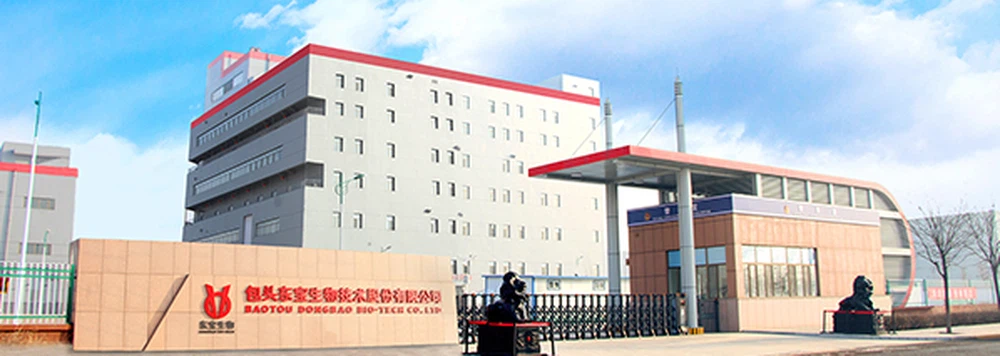
Our Factory
Baotou Dongbao Bio-Tech CO., LTD. was established in 1997 (The predecessor Baotou Fine Gelatin Factory was founded in 1960s). It is a high-tech enterprise and the sole public listed company in Chinese gelatin and collagen industry. Stock code: Dongbao Bio-Tech (300239).


FAQ
As one of the leading fertilizer manufacturers and suppliers in China, we warmly welcome you to buy or wholesale the best fertilizer in stock here from our factory. All customized products are with high quality and competitive price.
